
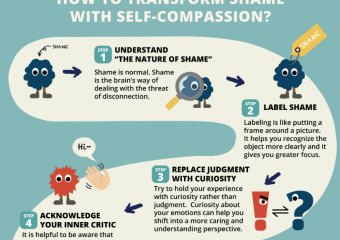
As practitioners, we know how transformative self-compassion can be – especially when it comes to healing shame. But here’s the thing – when a client is deeply rooted in shame, the very idea of being kind to themselves can feel undeserved and uncomfortable, even unnatural. So what if we could give them a step-by-step process […]
Two Compassion-Based Ways to Help Your Client Overcome Shame

Without a doubt, the compassion we offer our clients is often a key part of their healing. But how do we help our clients build compassion toward themselves . . . . . especially when they feel frozen and unable to act, cut off from themselves and those they care about? When their ability to […]
Applying the 3 Circles Model of Emotion to Help Clients Heal Shame [Infographic]
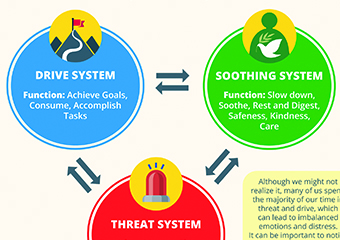
According to Paul Gilbert, PhD, we have three types of emotion regulation systems – we’ve got the Threat System, the Drive System, and the Soothing System. Now when a client is stuck in a painful cycle of self-criticism and shame, it’s often because these three systems are out of balance. You see, many clients spend […]
One Key Insight That Can Help Clients Undo Years of Blame and Shame

As practitioners, we’re well-acquainted with the fight, flight, freeze response – that automatic response that evolved to protect us from external threats or danger. But what happens when the threat is internal? When the threat is painful emotions or distress? Our response can still be automatic, and for many clients it can often be to […]
How Effective are Compassion-Oriented Interventions in Clinical Settings? Here’s What the Research Shows…

As a practitioner, you know the critical role compassion plays in the work that we do. In fact, you were probably drawn to this profession out of a deep sense of compassion, that overpowering desire to relieve suffering. Now, putting compassion to work in the clinical setting goes far beyond just the desire to relieve […]
A Traumatized America: Weeping with Those Who Weep

In the aftermath of the recent tragedies in El Paso and Dayton, it’s nearly impossible to know what to do or say. These acts of gun violence bring up all sorts of painful emotions – grief, sadness, anger, and fear. As the daughter of a pastor, I was taught the importance of weeping with those […]
Working with Abandonment – A Common Therapeutic Mistake

When we’re working with a client’s fear of abandonment, it can add a unique challenge to the therapeutic relationship. You see, the client already has their rejection radar up. So we might become overly cautious to avoid doing anything that could feed into their fear. Problem is, this approach can sometimes be counterintuitive. Not only […]
What Goes on in a Perfectionist’s Brain

Many people see perfectionism as essential for success. After all, setting high standards and achieving big goals can feel very rewarding. Problem is, perfectionistic behavior can also come with a cost – it can get in the way of people’s relationships, and even lead to depression and anxiety. So, is there something in a person’s […]
Perfectionism – The Drive to be Perfect and What it Costs Clients

When we think of perfectionism, we often think of the rewards that sometimes come with it . . . . . . think: the respect and admiration of others, the thrill of mastering a new skill, or the sense of accomplishment after a job well done. And when a client is reveling in these kinds […]
Treating the Trauma That Lingers in the Body

After experiencing trauma, many clients live in near-constant fear that it will happen again. It’s not only the brain that goes into a vigilant state of bracing for danger – it’s the body and nervous system as well. That’s why we created this illustration for you to share with your clients. It’s one way to […]