
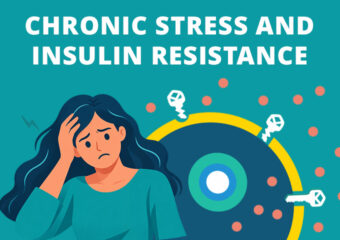
When a person senses danger, their body does something remarkable. It temporarily stops storing glucose, so every bit of it is available for energy (just in case they need to get away quickly). Now once the danger passes, that response is supposed to shut off. In this video, Sherita Golden, MD, explains what happens when […]
[Infographic] Why Metabolic Health Matters More Than You Think
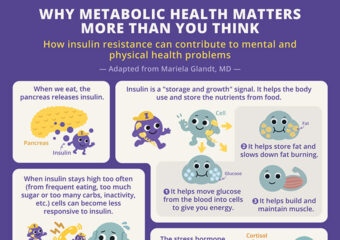
How insulin resistance can contribute to mental and physical health problems What if a client’s fatigue, changes in mood, or memory concerns had something to do with how their cells respond to insulin? We’ve long associated insulin resistance with diabetes and heart disease . . . . . . but researchers are now uncovering connections […]
What Harvard Research Says about the Patient/Practitioner Bond

Here’s an intriguing finding out of Harvard University: a strong patient-practitioner relationship may benefit the practitioner as well as the patient. And researchers are beginning to identify some of the biological processes that could help explain why. In this video, Donna Jackson Nakazawa, an award-winning science journalist and author, walks through some of that research, […]
GLP-1s and Alcohol Use: What the Early Research Shows
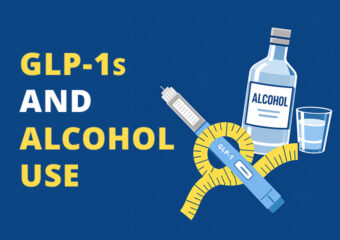
Could a medication commonly used for diabetes and weight loss also change a person’s drinking habits? New research suggests that it might. In this video, Arpan Patel, MD, walks through what a recent randomized trial found about GLP-1 medications and alcohol use. Take a look. It’s just over 4 minutes. As Arpan described, the research […]
When a Psychiatric Diagnosis Doesn’t Tell the Whole Story
What if the diagnosis a patient has carried for decades is hiding something else entirely? Christopher Palmer, PhD, tells the story of a woman who spent 20 years in a psychiatric hospital with a diagnosis that no one thought to challenge . . . . . . until someone finally asked a question no one […]
What Works Best to Ease Stress and Depression?
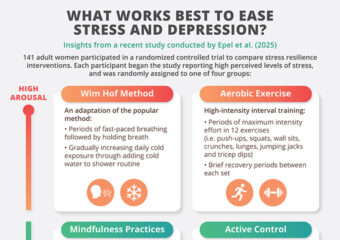
Cold exposure and breathwork. High-intensity interval training. Mindfulness. A slower, gentler practice. Which approach is most effective in helping a client build greater resilience to stress? Researchers put all four head-to-head in a randomized trial to see which one actually reduced symptoms. We put this together so you could share with any client who’s convinced […]
[Infographic] Primer on How Inflammation Works
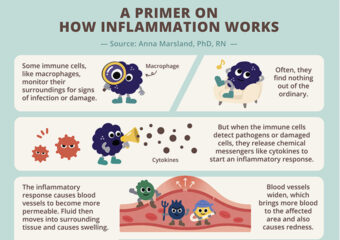
Swelling. Redness. A wave of white blood cells rushing to the scene. Most people recognize what inflammation looks like. Fewer could explain why the same response meant to protect the body could become a risk to the mind as well. Here’s a primer on how inflammation works, and why it matters beyond infection and injury. […]
When the Brain’s “Construction Crew” Wreaks Havoc
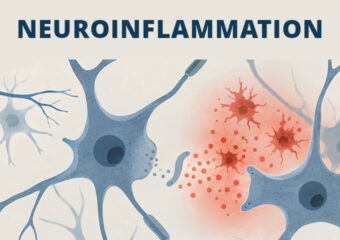
How does the brain respond to chronic inflammation? When immune cells show up in the brain, are they the problem, or are they trying to fix one? In this video, Jonathan Kipnis, PhD, a neuroscientist and immunologist, shares a simple analogy to explain neuroinflammation and what it’s actually trying to do. Take a look: it’s […]
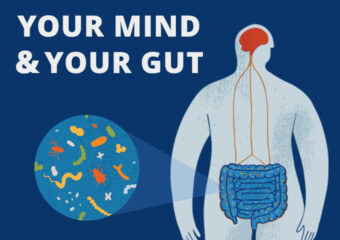
[Infographic] The Brain-Gut Microbiotic Axis
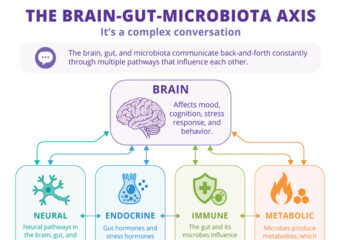
For years, we’d drawn a quiet line between what belongs to mental health and what belongs to physical health. But science keeps uncovering just how connected they really are. Take for example the interconnections between the brain and the gut. Top researchers are now looking more deeply into the body’s interconnected signaling pathways and how […]
CBT, Mindfulness, and the Microbiome
We often think of Cognitive Behavioral Therapy (CBT) as a tool for changing thoughts. But according to Kirsten Tillisch, MD, it also appears to be changing something you might not expect: The gut microbiome. In this video, Kirsten explains what happened when CBT was applied to irritable bowel syndrome (IBS) . . . . . […]