
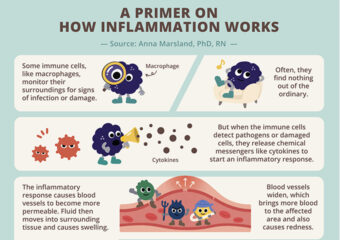
Swelling. Redness. A wave of white blood cells rushing to the scene. Most people recognize what inflammation looks like. Fewer could explain why the same response meant to protect the body could become a risk to the mind as well. Here’s a primer on how inflammation works, and why it matters beyond infection and injury. […]
[Infographic] The Brain-Gut Microbiotic Axis
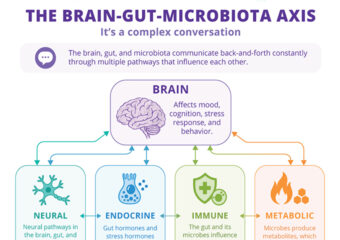
For years, we’d drawn a quiet line between what belongs to mental health and what belongs to physical health. But science keeps uncovering just how connected they really are. Take for example the interconnections between the brain and the gut. Top researchers are now looking more deeply into the body’s interconnected signaling pathways and how […]
[Infographic] The Neuroscience of Naming Shadow Parts
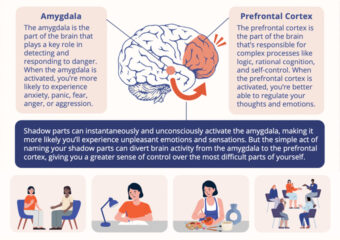
As therapists, we know the power of naming something. You’ve probably heard this before . . . . . . you have to name it to tame it. Well, not only does that sound catchy, but there’s a wealth of research to back it up. So when it comes to working with the parts of […]
[Infographic] How Psychedelic-Assisted Psychotherapy Works
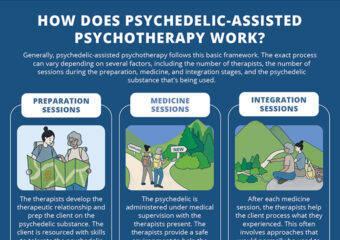
In recent years, there’s been a growing interest in the use of psychedelics in the treatment of trauma. And in all the excitement over the latest findings, some clients may be eager to experiment. The problem is, they may not always be aware of the risks involved – especially when it comes to taking that […]
[Infographic] How the Nervous System Responds to Abandonment
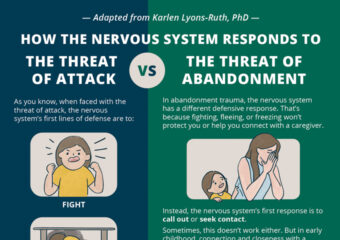
We know that in the face of threat, the nervous system responds in ways designed to help keep us safe. For example, if your client was under physical attack, their nervous system may have gone into fight, flight, or freeze. But of course, that’s only one type of threat. And the responses that might be […]