

A single moment can last forever in our memory . . . Now when it’s something special, a time or an event that we hold dear, reliving memories can feel almost as good to us as the actual moment did. But when someone’s memory keeps replaying a traumatic experience, that can cause them to relive […]
Is Chronic Worry Linked to Increased Likelihood of PTSD?

Is it possible that chronic worry may be linked to an increased likelihood of developing PTSD? I can remember my father telling me, “Take therefore no thought for the morrow: for the morrow shall take thought for the things of itself. Sufficient unto the day is the evil thereof.” (The Bible was quoted often in […]
Treating Trauma in Children

Trauma’s victims are often among the most vulnerable in society . . . . . . especially when they include children. When trauma occurs at a young age, children can face biological effects that change the way their brains are developing. This includes parts of the brain that are critical for processing emotions like trust, […]
Trauma’s Impact on the Brain

When a traumatic event triggers our internal alarm system, the body goes into fight, flight, or freeze . . . . . . but what happens in the brain during trauma? According to Dan Siegel, MD, there are two key chemical reactions to trauma (and one can play a role in actually shrinking part of […]
Rethinking Trauma: The Third Wave of Trauma Treatment

As someone who’s been practicing for a while, I’ve seen our view on the treatment of trauma go through substantial development. Our research, theory and treatments have all advanced considerably in the last 40 years. And as I reflect upon this, I’m seeing 3 waves in the evolution of our outlook. Looking back at when […]
PTSD, the Brain, and Pain

A single traumatic experience can set off many different levels of pain, whether emotional or physical, acute or chronic. But can PTSD affect how the brain processes pain? Marla Mickleborough, MA, of the University of British Columbia and Judith Daniels, PhD, of the University of Western Ontario, wanted to find out whether the brain might […]
Fear and Shame: Loosening Trauma’s Grip
Often a trauma patient’s body seems to tell them, “There’s something wrong with me. Everything is my fault. I’m so ashamed.” It’s challenging, helping patients learn how to quiet the messages their bodies are sending them so they can self-regulate and heal. And for some clients, just hearing the word body can activate a fear […]
Helping Trauma Survivors Shed Feelings of Shame
For trauma survivors, one of the most insidious roadblocks to healing is often the debilitating feeling of shame that can linger after a traumatic experience. So how can practitioners help clients begin to reclaim a sense of self-worth? Kerstin Jung, PhD and Regina Steil, PsyD, at Goethe University Frankfurt, in Frankfurt, Germany, wanted to find […]
Resistance to PTSD: Could It Be in Your DNA?
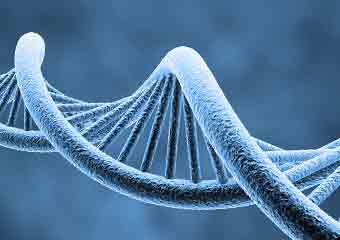
Not everyone who experiences trauma develops PTSD. So what might be boosting the resilience of the folks who experience trauma and don’t suffer from PTSD? According to Israel Liberzon, MD, of the University of Michigan, Ann Arbor, genetic factors might play a role. When combined with trauma in early childhood, a tiny DNA change (or […]
Three Ways Trauma Can Change the Brain

The treatment of trauma can be some of the most complex work practitioners face. And for years, this challenge was complicated by not having a clear picture of the impact that trauma has on the brain. But scientific advances within just the past few years have opened the eyes of practitioners to what actually happens […]