
Trauma can have a profound impact on a person’s memory . . . . . . and traumatic memory can affect not only the brain, but also the body and nervous system as well. But conceptualizing how trauma can impact the different types of memory can be challenging, so we created a free tool for […]
3 Strategies to Help Trauma Patients Feel Safe

As practitioners, we know how crucial it is to create a safe space when working with clients who have experienced trauma.But this can often be challenging . . . and nuanced. That’s because for many trauma patients, sometimes even a friendly face or a gesture of compassion can feel unsafe, even threatening. So what are […]
Polyvagal Theory & Perfectionism – A Brief Case Study

In so much of modern society, perfectionism is something people often regard as necessary for success.But even though it can sometimes give us a healthy competitive edge, or push us to try and achieve impossible-sounding goals . . . . . . perfectionism often comes with a cost. You see, for many clients, their perfectionistic […]
Three Ways to Resource Clients When Anxiety Is Triggered
When a client struggles with emotional triggers, finding ways to help them disrupt that automatic cycle of reactivity can be difficult.But according to Rick Hanson, PhD, there are three key practices that can help a client regain a sense of safety and calm – especially when anxiety gets triggered. He takes us through them in […]
One Childhood Lesson That Sticks with Me

From a young age, I was taught that it is more blessed to give than to receive . . . . . . and over the years, I’ve come to appreciate the wisdom behind those simple words. You see, one of the founding principles of NICABM is to give back and do what we can […]
One Way to Start Shifting Clients Out of a Blame Mindset
Clients who tend to blame other people for their problems can be uniquely challenging to work with. And sometimes, that’s because they struggle to consider their own role in a situation. So how can we help them reframe their perspective and start to shift out of a blame mindset? Well according to Ron Siegel, PsyD, […]
Could a Smartphone App Help Treat PTSD?

Could people who experience PTSD hold a potential key to relief right in the palm of their hand? I’m talking about a smartphone app that could help reduce symptoms of PTSD. Back in 2011, the U.S. Veterans Affairs National Center for PTSD developed the app, PTSD Coach, to help veterans suffering from posttraumatic symptoms. Since […]
Thanksgiving – The Best Night of Sleep You’ll Get All Year? (But Probably Not for the Reason You’re Thinking)

Could Thanksgiving be the best night’s sleep you’ll get all year? According to research, the answer might be yes . . . . . . but it isn’t because of the turkey. You see, a pioneering study from 2009 looked at whether another Thanksgiving staple could have sleep benefits. I’m talking about gratitude. Alex Wood, […]
Treating Trauma in 125 Countries

Now that we’ve wrapped up the Treating Trauma Master Series, I’d like to take a moment to thank you again for tuning in. 51,850 practitioners joined us for one or more sessions of the program. We believe the work you do with people who’ve experienced trauma is so important. That’s why we made it our […]
Brain-Based Approaches to Help Clients After Trauma [Infographic]
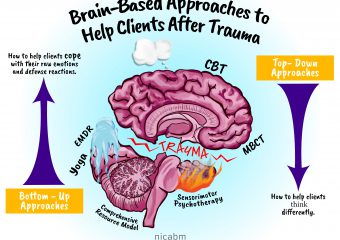
After trauma, it can seem like the lower brain – the parts responsible for our emotional reactions and our defense system – has been severed from the upper thinking brain. This can leave clients feeling the heat of their emotions, but without insight or cognitive reflection. So when we think about treating trauma, our clinical […]