
• Skip to primary navigation
  • Skip to main content
  • Skip to primary sidebar

NICABM home pageNICABM

Better outcomes. More quickly.

  • Home
  • Courses
  • Experts
  • Blog
  • Contact
  • Log In

Understanding Trauma Triggers, with Stephen Porges, PhD

14 Comments

Stephen Porges on how Polyvagal Theory can help traumatic triggers

In the aftermath of trauma, some clients struggle to feel a sense of connection to their bodies. And when clients can’t properly interpret the sensations or messages that the body is sending to the brain, it can be very difficult for them to get a handle on their triggers. So in the video below, Stephen […]

Treating Trauma in 141 Countries

37 Comments

Treating Trauma - Global participants in the Advanced Master Program on the Treatment of Trauma

Now that we’ve wrapped up the Advanced Master Program on the Treatment of Trauma, I’d like to take a moment to thank you again for tuning in. We believe the leading research and developments on trauma treatment are so important. That’s why we made it our mission to make this program available to as many […]

[Infographic] How Trauma Can Affect Adult Relationships
64 Comments

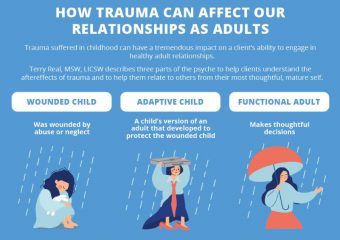
The Impact of Trauma on Adult Relationships Infographic Adapted from Terry Real

Left untreated, childhood trauma can reverberate through adult relationships and make it difficult for your client to get close to other people. But Terry Real, MSW, LICSW has a way of thinking about the psyche that can help clients understand the aftereffects of trauma . . . . . . and help practitioners retarget their […]

[Infographic] How to Differentiate Between the Freeze and Shutdown Trauma Responses
32 Comments

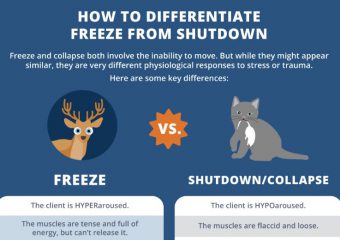
How to tell the difference between a freeze and shutdown trauma response

The freeze and shutdown responses to trauma can resemble each other . . . . . . but they are very different in terms of what’s happening in your client’s brain, body, and nervous system. And that means they require different grounding strategies as well. In this infographic, we lay out some key cues to […]

[Infographic] Working with Structural Dissociation
102 Comments

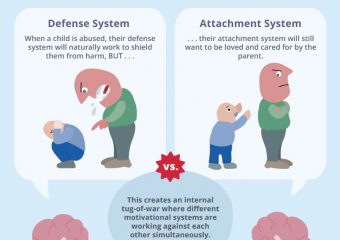
Treating Trauma Structural Dissociation Model Infographic

One challenge of working with trauma is when a patient’s dissociated “parts” are operating independently . . . . . . or worse, they’re at odds with each other. This can be very distressing for the patient (and lead to a dysregulated nervous system). But the Structural Dissociation Model developed by Kathy Steele, MN, CS, […]

  • <
  • Page 1
  • Interim pages omitted …
  • Page 17
  • Page 18
  • Page 19
  • Page 20
  • >

Recent Posts

  • In Memory of Marsha Linehan, PhD
  • Chronic Stress and Insulin Resistance: A surprising connection
  • [Infographic] Why Metabolic Health Matters More Than You Think
  • What Harvard Research Says about the Patient/Practitioner Bond
  • GLP-1s and Alcohol Use: What the Early Research Shows

Categories

  • Antiracism
  • Anxiety
  • Attachment
  • Body-Oriented Therapy
  • Brain
  • Charity
  • Chronic Pain
  • Compassion
  • COVID-19 Pandemic
  • Depression
  • Emptiness
  • Exercise and Mental Health
  • Fear
  • Gaslighting and Manipulation
  • Grief
  • Healing Trauma
  • Infographics
  • Mindfulness
  • Nervous System
  • Neuroplasticity
  • Perfectionism
  • PTSD
  • Relationships
  • Resentment
  • Shadow Side
  • Shame
  • Spirituality
  • Trauma
  • Trauma Therapy
  • Uncategorized
  • Unworthiness

40 Wilbur Cross Way Suite 102
Storrs, CT 06268
(860) 477-1450

NICABM Logo

About Us
FAQs
Contact Us
Courses
Claim CE/CMEs
Accreditation
ADA Accommodation
Hiring
SITEMAP PRIVACY POLICY TERMS OF USE

CONNECT WITH US

Facebook Logo YouTube Logo Instagram Logo

40 Wilbur Cross Way, Suite 102
Storrs, CT 06268
Phone: (860) 477-1450
respond@nicabm.com
Copyright © 2026