
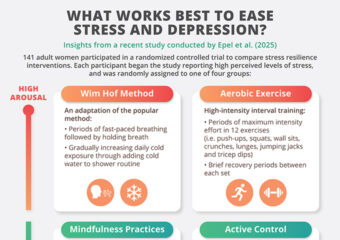
Cold exposure and breathwork. High-intensity interval training. Mindfulness. A slower, gentler practice. Which approach is most effective in helping a client build greater resilience to stress? Researchers put all four head-to-head in a randomized trial to see which one actually reduced symptoms. We put this together so you could share with any client who’s convinced […]
[Infographic] Primer on How Inflammation Works
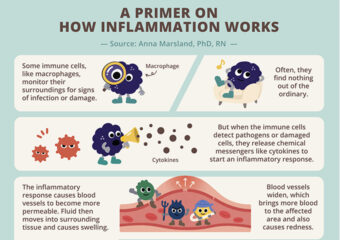
Swelling. Redness. A wave of white blood cells rushing to the scene. Most people recognize what inflammation looks like. Fewer could explain why the same response meant to protect the body could become a risk to the mind as well. Here’s a primer on how inflammation works, and why it matters beyond infection and injury. […]
[Infographic] The Brain-Gut Microbiotic Axis
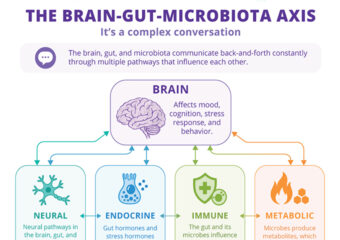
For years, we’d drawn a quiet line between what belongs to mental health and what belongs to physical health. But science keeps uncovering just how connected they really are. Take for example the interconnections between the brain and the gut. Top researchers are now looking more deeply into the body’s interconnected signaling pathways and how […]
[Infographic] The Neuroscience of Naming Shadow Parts
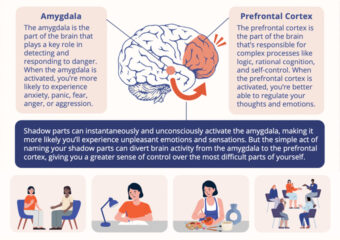
As therapists, we know the power of naming something. You’ve probably heard this before . . . . . . you have to name it to tame it. Well, not only does that sound catchy, but there’s a wealth of research to back it up. So when it comes to working with the parts of […]
The Neuroscience of Mindfulness and Fear
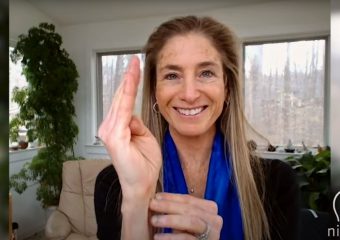
When a client is afraid, there’s a practice that can help them stay grounded in the present . . . . . . instead of getting hijacked by panic and “worst-case scenario” thinking. And that practice is mindfulness. In the video below, Tara Brach, PhD will get into how mindfulness disrupts the neurobiology of fear, […]