
It’s often easy to identify the obvious cues that your client is in freeze . . . . . . but what about times when the signs are so subtle, you might dismiss it (or even overlook it)? In the video below, Ruth Lanius, MD, PhD shares how recognizing a more subtle sign of freeze […]
How to work with Shutdown vs. Freeze – with Ruth Lanius, MD, PhD
In the face of a traumatic experience, some clients become unable to move. This can sometimes indicate that a client is experiencing either a freeze response or a shutdown response to trauma. And according to Ruth Lanius, MD, PhD, there are key neurological differences that can help us distinguish between the two . . . […]
2 Strategies for Working with the Freeze Response
As therapists, we may sometimes feel unsure about what to do when a client enters a freeze response and loses their ability to speak. What’s more, it can be difficult to gauge a client’s sense of safety when they’re unable to talk to us. So in the video below, Janina Fisher, PhD walks us through […]
A Simple Metaphor to De-Shame a Client’s Trauma Response, with Ron Siegel, PsyD
After a traumatic event, a client might feel deeply ashamed by how they responded to the situation. Perhaps they froze and now blame themselves for not fighting back. Or, maybe they ran away, but now regret not standing up for themselves. As clinicians, we’re able to recognize that these reactions happen at the level of […]
Is Your Patient “Feeling” Unworthy? What May Be the Underlying Cause, with Janina Fisher, PhD
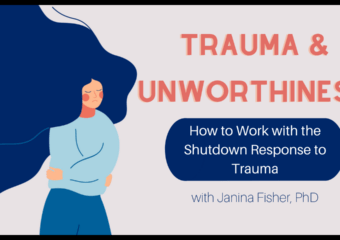
Trauma can leave a patient with a deep sense of unworthiness. On top of that, your client might even blame themselves for feeling this way. But as we know, there’s always a purpose behind a patient’s response to trauma. And sometimes, the challenge is getting your patient to see the wisdom behind their response – […]