
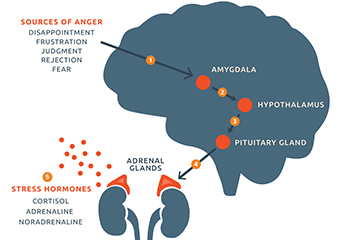
Anger can be one of the most challenging emotions that we work with. Clients are sometimes afraid of their anger. Or, maybe they consider it inappropriate to even feel this way at all. Not only that, when anger is misdirected, it often leads to poor choices, damaged relationships, and even violence. But anger can actually […]
Could Stronger Resilience Promote Better Health?

Could greater resilience reduce a person’s need for health care services? James E. Stahl, MD, MPH, and a team of researchers at the Massachusetts General Hospital Benson-Henry Institute (BHI), noted that poor psychological and physical resilience is often associated with an increased use of healthcare services. Since research consistently shows that mind-body interventions can be […]
How to Help Clients Process Their Fears about World Events

When you look at the news, there’s pain and violence on every broadcast. But is this something we should help our clients process? Patrick Dougherty would say yes. And he has some clear, helpful guidelines for how to bring up difficult and divisive political and social issues in therapy. It’s one way we can help […]
Could Yoga Hold the Key to Healing a Patient’s Trauma?

Approximately 10 million women in America have been physically assaulted at some time in their life. Yes, that’s a sobering statistic. But the far-reaching effects of violence against women are even darker. Over a third of these survivors experience Post-Traumatic Stress Disorder with increased rates of depression, obesity and heart disease. So how do we […]
Polyvagal Theory in Action – How Heart Rate Figures Into Trauma Treatments

How can the body become a resource for a patient who’s experienced trauma? Polyvagal Theory helps us answer this question by explaining how people process their environment and how the body regulates itself in the face of stress and trauma. Watch the video below as Stephen Porges, PhD shares one way to apply Polyvagal Theory […]