

Many of our adult clients struggle with the ability to control their thoughts and impulses. These weak self-regulation skills can damage relationships, decrease success at work, and lead to addictive behaviors. What if we could have intervened early on in their lives, even as early as grade school? What kind of changes would that have […]
A Simple Mindfulness Practice to Restore Vitality

When clients lose their sense of aliveness and vitality, how can we help them reclaim it? According to Dr. Tara Brach, we can begin by helping them notice the tension in their bodies. In the video below, Tara shares a personal story of how this helped her reclaim her own sense of aliveness. She also […]
How Drama and Theater Can Rewire Limiting Beliefs

As practitioners, we sometimes have to be creative in coming up with interventions that will work for a particular patient. And this can be especially true when clients have deeply rooted limiting beliefs about themselves after trauma. Bessel van der Kolk, MD is a master at coming up with creative approaches to help clients work […]
Guilt vs. Shame [Infographic]
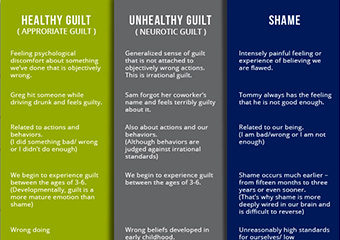
What are the differences between guilt and shame? And how could it help our clients to have a better understanding of those differences? We thought it could be useful for you to have a side-by-side comparison of these powerful emotions that you could share with your clients. Because understanding these differences could help our clients […]
How to Help Clients Build Resilience after Trauma

How can we foster resilience in clients who have experienced trauma? A person’s response to trauma is often to lock away the parts that were wounded by their experience. But that can leave them feeling protective and fragile – and fearful about being triggered again. In the video below, Richard Schwartz, PhD shows how working […]