

There’s one approach to treating trauma that I’ve been hearing experts refer to more and more lately (in conversation, and also in a couple of recent workshops we’ve hosted). It’s Coherence Therapy. But what exactly is that? Well in short, it’s a framework designed to help clients overwrite conditioned emotional responses associated with traumatic memories. […]
[Infographic] The Neuroscience of Naming Shadow Parts
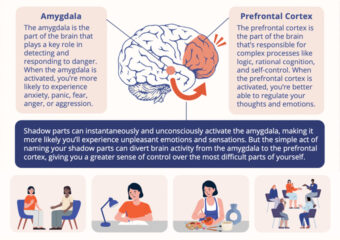
As therapists, we know the power of naming something. You’ve probably heard this before . . . . . . you have to name it to tame it. Well, not only does that sound catchy, but there’s a wealth of research to back it up. So when it comes to working with the parts of […]
A Parts Approach for Restoring Pleasure and Vitality After Trauma with Janina Fisher, PhD
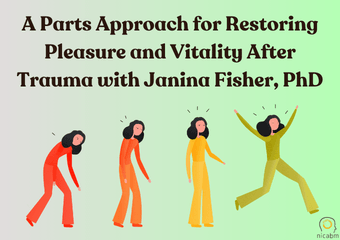
After trauma, there’s one (critical) stage of healing that can often feel elusive. You see, even when a client has made significant progress in therapy, they often still report feeling numb, and not fully present in their own life. That’s why interventions designed to help clients reconnect with their sense of vitality and pleasure can […]
How to Help Traumatized Patients Restore their Vitality – with Bessel van der Kolk, MD
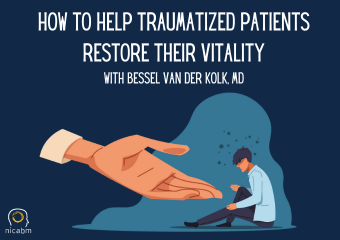
So much of our work with traumatized patients is often centered around trauma stabilization and processing. . . . . . but if we don’t help patients move beyond these early stages of recovery, they’re at risk of staying stuck in the past, repeatedly re-engaging with their trauma. So in the video below, Bessel van […]
Recognizing and Treating Moral Injury – with Bill Nash, MD
Moral injury is not necessarily a new phenomenon in the human experience, but it’s a relatively young concept in the field of psychology. The research is still evolving – but we’re discovering more about the overlapping similarities and key differences between moral injury and PTSD. And as leading researchers like Bill Nash, MD uncover more […]