

Now 50% Off for a Limited Time
50% Off – Sale Ends Tomorrow
50% Off – Sale Ends Tonight
Why Neglect Doesn’t Look Like Other Trauma (How to Identify and Treat It)
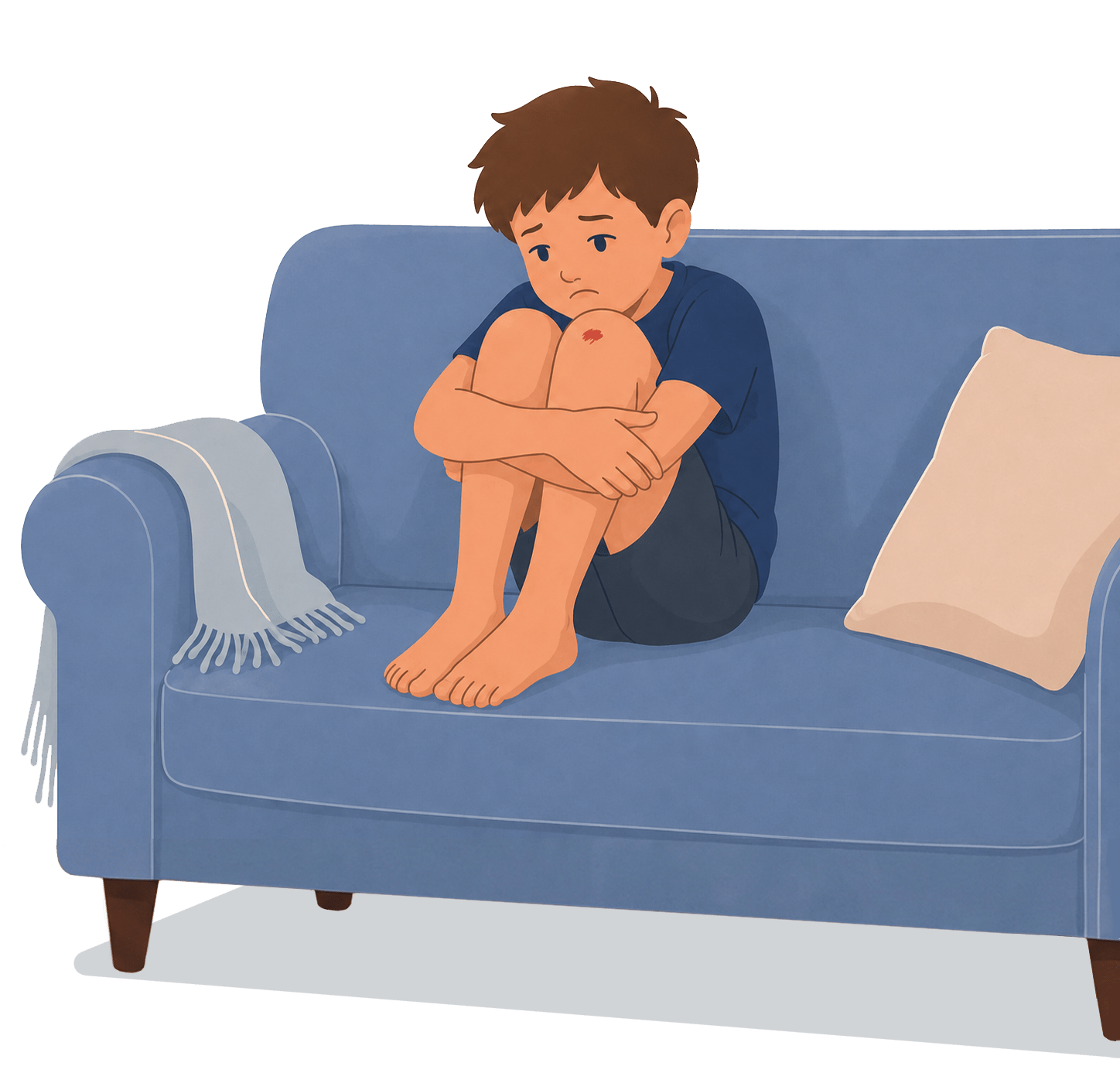 It’s unlikely that a client with a history of neglect will walk into your office and tell you they were neglected.
Many don’t realize it themselves.
But there are signs. They go through life keeping others at arm’s length, putting themselves last, and never quite believing they deserve more.
And while they might insist that their childhood wasn’t actually that bad, they are shut down emotionally, can’t seem to follow through, and don’t expect anyone to show up for them.
Left untreated, the impact of childhood neglect can have a significant impact on a client’s executive function later in life.
And here’s the problem: the classic symptoms of trauma that we might easily recognize are often absent in a client who experienced neglect.
So, by the time we recognize what we’re looking at, the standard trauma tools we might reach for often aren’t the right ones.
In this short course, twelve of the field’s leading experts come together to help you identify neglect clearly, so you can treat it with precision.
— New Short Course —
How to Identify and Treat the Invisible Wounds of Neglect

The Neurobiology of Neglect – and What It Can Tell Us About How to Approach Treatment
Janina Fisher, PhD Ruth Lanius, MD, PhD Margaret Sheridan, PhD
Martin Teicher, MD, PhD Bessel van der Kolk, MD Karlen Lyons-Ruth, PhD
- Why your client’s “procrastination” might actually be a presentation of trauma
- How a mother’s neglect history can impact her infant’s stress hormones
- Why it’s essential to reframe neglect as a threat, not a deficit
- The hypoarousal pattern that can make a neglect survivor look like they’re “just slow” or “just disconnected”
- Now neglect shapes early brain development

Specific Questions to Help You Assess for Neglect
Usha Tummala-Narra, PhD Eboni Webb, PsyD
Janina Fisher, PhD Margaret Sheridan, PhD
- Why classic trauma symptoms such as fear, intrusive memories, and hypervigilance are often absent in survivors of neglect
- The two attachment disorders most often linked to childhood neglect (and the hypo/hyper distinction between them)
- The five forms of neglect every clinician should be able to distinguish (and how the distinction shapes our treatment approach)

Key Signs That Might Indicate Your Patient Has Experienced Neglect
Janina Fisher, PhD Ruth Lanius, MD, PhD
Martin Teicher, MD, PhD Pat Ogden, PhD
- An opening clue that your client has experienced neglect (before they’ve said a single word)
- Why reassurance often falls short with clients who’ve experienced neglect
- A single question that can help a client recognize when they begin to withdraw
- Why a survivor of neglect may struggle to feel closeness toward a partner they genuinely love
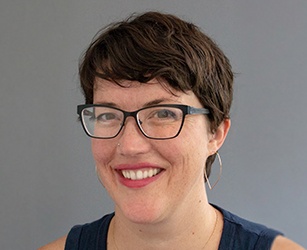
The Latest Findings on the Impact of Childhood Neglect on Executive Function Later in Life
Margaret Sheridan, PhD
- How deprivation specifically affects executive function
- What to know about neuroplasticity windows in adolescence
- Presentations typically associated with reactive attachment disorder and disinhibited social engagement disorder

Why Certain Interventions Might Be Contraindicated in Cases of Neglect
Pat Ogden, PhD Janina Fisher, PhD
Ron Siegel, PsyD Margaret Sheridan, PhD
- Why challenging a client’s beliefs about “deserving care” too early is a dead end
- Why relaxation and stress-reduction interventions miss the real target for neglect survivors
- The neurobiological reason direct eye contact can activate threat-response circuitry in some clients

Adapting Clinical Practice for the Trauma of Neglect
Eboni Webb, PsyD Ron Siegel, PsyD Megan Schmidt, PsyD
- What makes emotional neglect more difficult to treat than other forms of trauma
- Specific presentation features that signal early neglect
- Consequences of traumatic and emotional neglect

A Deeper Look at the Invisible Wounds of Neglect
Usha Tummala-Narra, PhD Ruth Lanius, MD, PhD
Ruth Buczynski, PhD
- Differences Between Systemic and Malevolent Neglect
- Key Strategies for Working with Hypoaroused Neglected Patients
- Nonverbal signs of neglect
- Why dissociation and neglect present almost identically (and how to tell the difference between them)
- Bottom-up sensory strategies for working with neglect
Register Here for $197 $97
You’ll get all the videos, audios, transcripts, learning tools, plus a bonus video to help you work with the trauma of neglect
Up to 2 CE/CME Credits or Clock Hours are available for purchase at checkout.
Click HERE to get information about CE/CME credits and clock hours as well as speaker disclosures

You Are Protected By
NICABM’s Money-Back Guarantee
We invite you to register for this training program without any risk. Unless you are completely satisfied, we will refund your money. Just let us know within 30 days from the date of registration. We are that confident that you will find this information to be more than you expected.
For This Short Course, We Brought Together Some of the Top Experts in the Field

Bessel van der Kolk, MD
Neuroscientist and Professor of Psychiatry at Boston University Medical School. Author of The Body Keeps the Score: Brain, Mind, and Body in the Healing of Trauma.

Pat Ogden, PhD
Pioneer in Somatic Psychology; Founder and Director of Sensorimotor Psychotherapy Institute (SPI); Co-founder of the Hakomi Institute; Author of Sensorimotor Psychotherapy: Interventions for Trauma and Attachment.

Janina Fisher, PhD
Licensed clinical psychologist and former instructor, Harvard Medical School; Advisory Board member of the Trauma Research Foundation

Ruth Lanius, MD, PhD
Professor of Psychiatry and Director of the Post-traumatic Stress Disorder (PTSD) research unit at the University of Western Ontario. Coauthor of The Impact of Early Life Trauma on Health and Disease: The Hidden Epidemic, and Healing the Traumatized Self: Consciousness, Neuroscience, Treatment.

Karlen Lyons-Ruth, PhD
Professor of Psychology at Harvard Medical School; clinical supervisor for the Cambridge Health Alliance Psychology and Psychiatry training programs; researcher on the effects of early adversity on neurobiological structure and function in adulthood.

Martin Teicher, MD, PhD
Director of the Developmental Biopsychiatry Research Program at McLean Hospital; associate professor at Harvard Medical School; former chief of the Laboratory of Developmental Neuropharmacology; researcher on the enduring effects of childhood maltreatment.
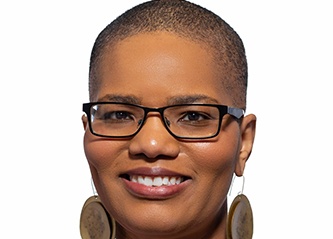
Eboni Webb, PsyD
Licensed psychologist; specializes in DBT for trauma-based disorders and co-occurring disorders; advisor to the DBT National Certification Accreditation Association.
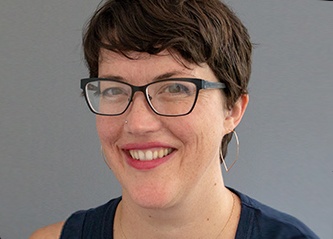
Margaret Sheridan, PhD
Director of the Child Imaging Research on Cognition and Life Experiences Lab (CIRCLE); assistant professor in the Clinical Psychology Program at the University of North Carolina; researcher on how early-life experiences impact neural development and risk of psychopathology.

Usha Tummala-Narra, PhD
Professor of Counseling, Developmental, and Educational Psychology at Boston College; Author of Psychoanalytic Theory and Cultural Competence in Psychotherapy; Co-author of Applying Multiculturalism: An Ecological Approach to the Multicultural Guidelines.
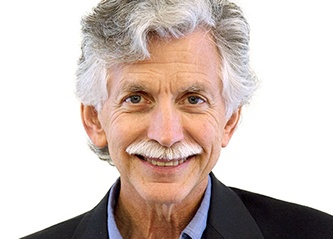
Ron Siegel, PsyD
Assistant Professor of Psychology, part time, Harvard Medical School; Author of The Mindfulness Solution: Everyday Practices for Everyday Problems; Coauthor of Back Sense: A Revolutionary Approach to Halting the Cycle of Chronic Back Pain and Sitting Together: Essential Skills for Mindfulness-Based Psychotherapy.
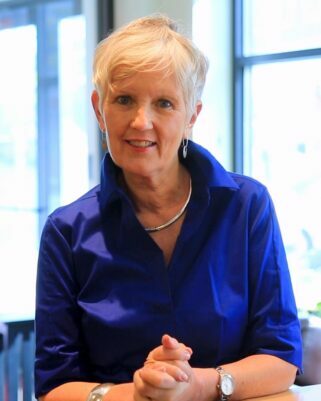
Course Director
Ruth Buczynski, PhD
Licensed Psychologist
President, NICABM
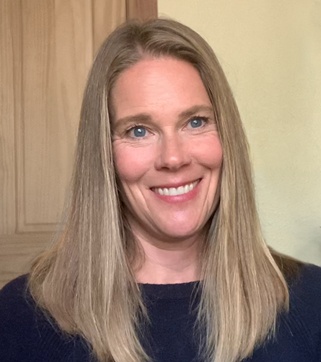
Co-Course Director
Megan Schmidt, PsyD
Licensed Psychologist
Staff Psychologist, NICABM
Here's What You'll Get:
Everything is yours to keep forever in your professional library

|
Downloadable videos and audios to watch or listen to when it’s convenient for you |
|
|
A Critical Insights session to distill key ideas (this is where we “land” the module) |
|
|
A Focus on Application session to give you concrete strategies to use with patients |
|
|
Printable QuickStart Guide to make review and action simpler than ever |
|
|
Professionally-formatted transcripts of the sessions |
|
|
Downloadable bonus video to help you work even more effectively with the trauma of neglect |
Also Get This Bonus Session That Gives Strategies for Helping Clients Increase Resiliency

Specific Factors That May Increase Resiliency to Effects of Childhood Trauma
Martin Teicher, MD, PhD Megan Schmidt, PsyD
- What researchers discovered when they scanned the brains of resilient survivors
- Why it’s essential to distinguish between recovery and reversal (and how that distinction can offer your client greater hope
- Two distinct resilience profiles identified by research (and how understanding them can impact treatment planning
- What the neuroscience of resilience suggests about matching specific therapies to specific brain regions
Register Here for $197 $97
You’ll get all the videos, audios, transcripts, learning tools, plus a bonus video to help you work with the trauma of neglect
Up to 2 CE/CME Credits or Clock Hours are available for purchase at checkout.
Click HERE to get information about CE/CME credits and clock hours as well as speaker disclosures
You Are Protected By
NICABM’s Money-Back Guarantee
We invite you to register for this training program without any risk. Unless you are completely satisfied, we will refund your money. Just let us know within 30 days from the date of registration. We are that confident that you will find this information to be more than you expected.
Plus, You’ll Get Practical Tools to Help You Take Action Immediately and Effectively
Synthesize Key Concepts So You Can Use Them Immediately
In the Critical Insights sessions, Ruth Lanius, PhD and Usha Tummala-Narra, PhD join Ruth Buczynski, PhD to dig more deeply into the key ideas. Our job is to make yours easier by streamlining the information from each module and making sure each point is crystal clear. We’ll clarify critical concepts and break it all down so you can gain confidence in your understanding.

Discover Concrete Practices That Will Work in Your Life, and with Your Patients
In the Focus on Application sessions, Ron Siegel, PsyD, Eboni Webb, PsyD and Megan Schmidt, PsyD give you specific practices and exercises you can use with your clients right away. For each module, you’ll get solid techniques and practical interventions that will help you apply what you’ve just heard.

Uncover Core Ideas and Techniques at-a-Glance So You Have a “Cheat Sheet” When You Need It Most
The QuickStart Guide will help you stay fresh and confident as you turn these teachings into action. We’ve gathered all the essential tools and methods from the series into a concise, easy-to-use guide so you can quickly review and apply these ideas when you need them most. It’s an at-a-glance reference to the most powerful concepts and strategies for working with patients who have experienced trauma.
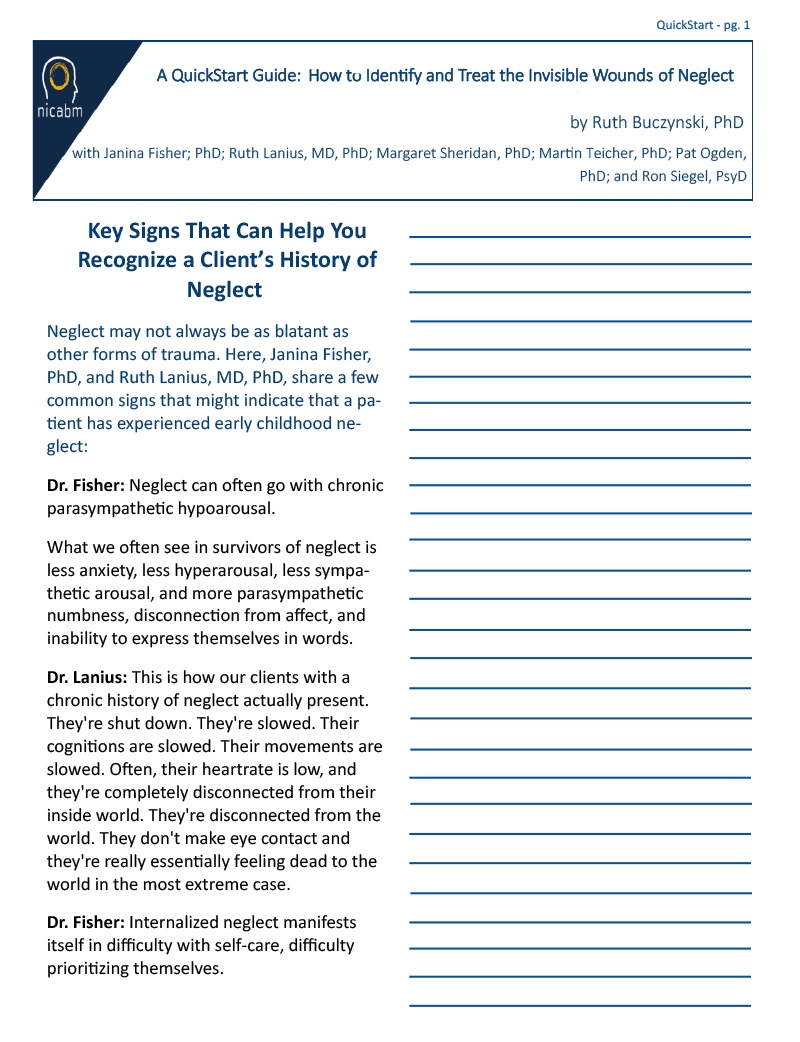
Quickly Recall Crucial Details So You Can Apply Them with Confidence
Our Professional Transcript will help you reinforce key ideas so you can integrate them into your life and work. We’ve designed your transcript with an easy-to-use table of contents, clear, organized formatting, and helpful highlight quotes so you’ll have the information and exercises you need at your fingertips.
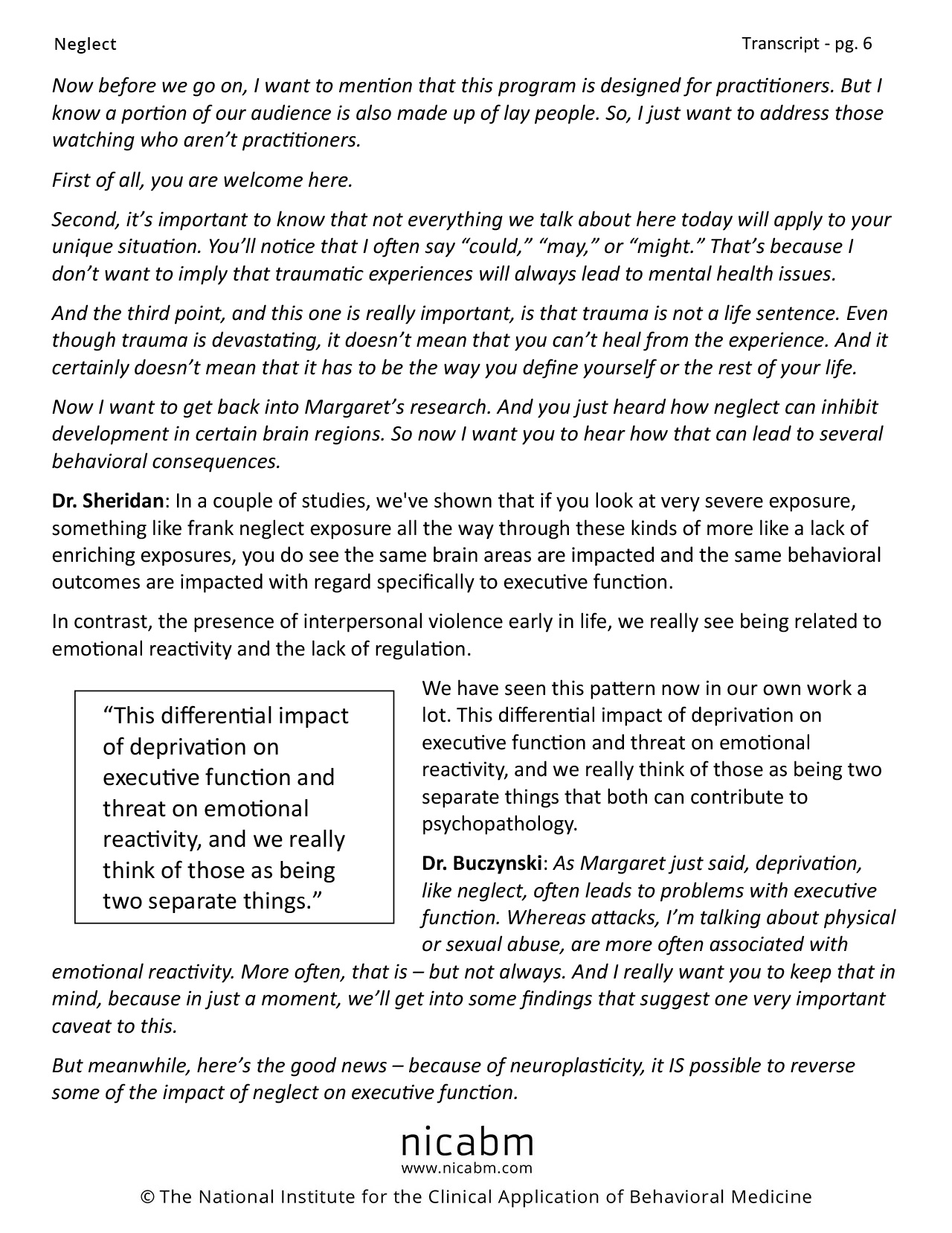
Here's What Your Peers Have Experienced In NICABM Programs
. . . the content is clear, simple and the very latest insights from the most outstanding people in the field of trauma.
“These presentations are fascinating and easy to watch as the technical presentation is very good, and the content is clear, simple and the very latest insights from the most outstanding people in the field of trauma. You would need to read a lot of books to end up with as much good quality information as you get from watching this program.”
Liz Kirsopp, Psychotherapist
Northumberland, UK
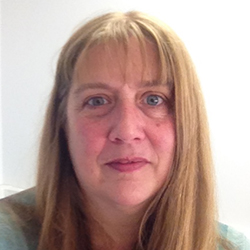
This program exceeded all my expectations . . .
“I am always open to learning, and this program exceeded all my expectations. Even though I am very familiar with many of the presenters, to see them in action is inspirational. As a seasoned Art Therapist and supervisor, I am always looking for innovative ways of looking at the clients and treating their issues. I already used the knowledge I gained with clients, and especially in supervision. Having purchased the Gold Package, it is like always having a personal supervisor at my beck and call.”
Hannah Sherebrin, Art Therapist
London, Ontario, Canada
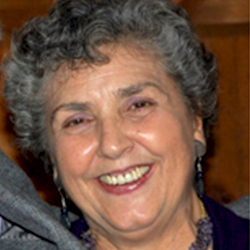
I am more confident in handling my challenging client . . .
“After this program I feel that I am more confident in handling my challenging clients. I have gained some new tools to add to my toolbox. I cannot recommend this program enough.”
Katie Stark, MA, LPC, NCC
Waterford, Michigan, USA

. . . evidenced based course to get a "helicopter" overview on trauma treatment . . .
“These NICABM 5 modules on trauma management is an excellent value for money evidenced based course to get a “helicopter” overview on trauma treatment from the professional experts.”
Su Keng Gan, Clinical Counsellor/Psychotherapist
Singapore, Singapore
Why the Transcript Is Essential:
Click the image to enlarge
- The transcript makes it easy to go back and double check concepts, citations and names that are mentioned
- We put in a table of contents to make it easy for you to find the exact part of the webinar you need
- Having the concepts already written allows you to take notes on how you’re going to use the ideas rather than transcribing the ideas
- Some people simply learn better by reading than by listening or watching
- You will be able to print out and share techniques presented in the session with your patients

“I really liked being able to follow along with the transcripts as I listened…it was nice not to feel like I had to take notes. I really feel like I remember more when I both hear and see at the same time.”
Mary Ellen McNaughton, Masters in Counseling, Psychology Counselor
Kelowna, British Colombia, Canada
You Are Protected By
NICABM’s Money-Back Guarantee
We invite you to register for this training program without any risk. Unless you are completely satisfied, we will refund your money. Just let us know within 30 days from the date of registration. We are that confident that you will find this information to be more than you expected.
Register Here for $197 $97
You’ll get all the videos, audios, transcripts, learning tools, plus a bonus video to help you work with the trauma of neglect
Up to 2 CE/CME Credits or Clock Hours are available for purchase at checkout.
Click HERE to get information about CE/CME credits and clock hours as well as speaker disclosures