How to Identify and Treat the Invisible Wounds of Neglect
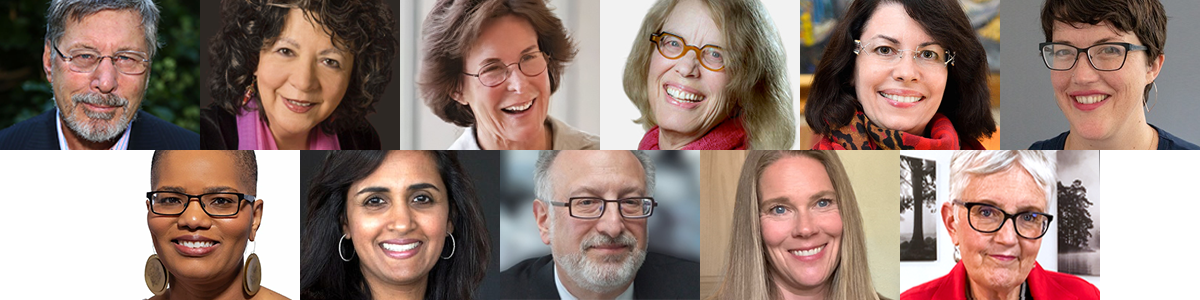
with Bessel van der Kolk, MD; Janina Fisher, PhD; Karlen Lyons-Ruth, PhD; Pat Ogden, PhD; Ruth Lanius, MD, PhD; Margaret Sheridan, PhD; Eboni Webb, PsyD; Usha Tummala-Narra, PhD; Martin Teicher, MD, PhD; Megan Schmidt, PsyD; Ruth Buczynski, PhD
Sign up for the Gold Package
We want you to get better outcomes from having invested your time and continuing education dollars into watching this program. What are you going to do differently after watching this module?
The physical action of reaching out and gathering in (receiving) is one I will use (yoga and dance teacher here). Poor eye contact and stooping posture (closed off to the world) too. Thank you for mentioning inter-generational neglect as many people I work with are children of parents who were born during WW2 and experienced neglect due to lack of clothing, food, and parents who needed to work around the clock.
As you speak, it just hit me, why this “reaching out, taking in for yourself” is such a powerful breathing movement in yoga (even chair yoga)! Reaching out, reaching around and reaching up, gathering in.💞
My “clients” are all those people who read my upcoming memoir, Beyond Childhood Trauma: A Compelling Journey of Hope and Healing. I never thought about neglect being a form of trauma, so your discussion was a great one for me. I can see where my background fit into emotional, etc., neglect and how it is still affecting me today. I’ll try some of the exercises you discussed… Thank you.
I liked what Pat Ogden did with clients with poor eye contact: she closed her eyes! I’m going to try that with a client whom I just started seeing.
Thank you.
Just this, that I found it difficult to understand Margaret Sheridan, due I think, to the echo in the room she was in. I also found the sound from the Harvard professor a bit indistinct. Perhaps coaching or technical tips for your guests would be helpful to even out the sound. Yet, a wonderful presentation.
Outstanding unpacking complexities of neglect with its unique variations! Pat Ogden, Janina Fisher provide REAL examples
for us to gain a sense of HOW to work with clients in slow important detail. Ruth’s interjections to clarify, summarize are
enormously helpful to track this sensitive, powerful material. Simply watching, listening – I was nearly flooded with
memories of past clients’ “clues” to me. I wish I’d have known to pace more slowly, deliberately to enhance an experience of safety and connection with them on their precarious Journey. Having a variety of practitioners share their strategies with specific examples is enormously helpful! Thank you!
Rose Cook, MSW
How do you regenerate the ability ‘to feel’ in an adult who cannot, or never permitted themselves to feel, or give or accept love, due to childhood neglect?
I appreciate the reminder about how important it is to attune to our clients in order to validate them and build trust (both with us and with themselves, that their experiences are real and valid) before diving into the deeper work.
I love the reminder about pacing. We so often might provide that external validation and praise too early so start small with shared observations.
Thank you so much for helping those of us who, while we’re not ‘practitioners’ have experienced trauma and need our own mirrors. Blessings and grace!
Anne
Thank you so much. Deep gratitude for the work of everyone involved in these presentations. I felt profoundly impacted by the “looking in to their eyes”. As well, I came to the realization of how careful I must be with a client to really be able to help them; the importance of taking time for the person to accept and receive what they didn’t get in as far as me the therapist attempting to replace the pain for the client’s self awareness to bring on their healing. I also recognized that trauma work is more nuanced and tactful than just this technique or that modality. Additionally I came into an awareness of the Therapeutic Alliance as a tool and not just a conduit for healing. All this is incredibly profound for me. Thank you.
Thank you for providing this information. It is invaluable. I particularly resonated with using eye contact and guiding my clients to adjust their posture. This will be very helpful with my clients in my PTSD Recovery and Resilience Initiative.
Thank you so much for this valuable information and for the generosity of your offer. Found the Assessment information, especially for the parents very helpful. It is helpful in both my personal life, as well as my coaching practice. Will definitely notice the body language from a different perspective after listening to this session.
Thank you very much for the information. Because many types of neglect might have, do you have any specific way of working with different types of neglect? How about what is the best treatment plan for the client?
I found the information about eye contact particularly interesting. I had not made the connection between neglect and the danger signals being set off with eye contact, although I intuitively understand it as truth. It’s helpful to know WHY neglect survivors have such a hard time with it. They are often shamed into believing they don’t look trustworthy, even when they can do nothing about it without intervention.
I am not a practitioner, but I managed my husband’s psychiatry private practice for many years. I have many long-term friends who have come from difficult childhoods, and have shared at depth many ways that they have been affected. I feel very indebted to them: that feeling of gratitude for the sharing came as I listened to the presenters and felt their investment in helping their clients to feel safe enough to deal with the difficulties from the past that were affecting their present lives detrimentally. Listening non-judgmentally, and encouraging appropriate gentle investigation into their difficulties seems to be very important. I hope I can do some of that for my friends. I am so glad when they connect with therapists who provide a safe space to grow and heal. I love cheering them on and hearing about their new insights and encouraging them to explore ways they can safely put them into practice. I wonder if therapists could provide more orientation for family members and friends to support people they love who are seeking and receiving professional help.
This presentation was so helpful to me. I have a 9y/o patient diagnosed with ADHD neglected by his parents in preverbal stages of his life. He presents with executive function issues and cognitive challenges at school. This presentation explains why my attempts to make him aware of feelings was counterproductive and gave me some guidance for interventions. I really appreciate your generosity and the privilege of learning about this topic. Thank you. I can’t wait for next session.
I will take more time with clients who do not make eyecontact. Rather than trying to break the ice with small talk or humor, I’ll go slower to figure out if their shyness/ nervousness is really a manifestation neglect/not being “seen”. Thank you for the excellence you have curated with a variety of experts. The case studies are are very helpful!
I recently watched the Buck Brannaman documentary, wherein Buck describes avoiding looking into his father’s eyes as a young child for fear of triggering a violent physical attack. In the documentary, others described this observed lack of eye contact to be shyness, when in essence it was a survival response
Thank you for sharing your important work with a broad array of folk across the globe. I find it helpful not only in my personal life, but also in my work teaching 🎻 to individuals of all ages. 🙏🏼🌻
Thank you. I like the suggestions of:
I *notice* that you …
I *see* you…
Patient facing me / or me closing my eyes / while patient looks up, around the room
Pace, slow down; “I notice that …” I.e. present-moment focus
My key takeaway from today’s session is to go slowly and gently with those suffering from neglect, and to show kindness: I know a high-functioning senior citizen who is very successful at work and with other accomplishments too but says she lacks self-worth and doesn’t know why. During our talks she recalled that her mother had a difficult pregnancy when carrying her, and so she was neglected and developed her own strategies for being self-sufficient.
Thinking about the neglected in a different way. Attunement will be used more than coping skills.
reminded that one needs to build rapport and trust before reassuring client that they deserve to be treated well.
Thank you. You affirmed work I’ve done with a very traumatized client.
Thank you so much for this great class. I live in Guatemala, otherwise I couldn’t receive so important information, if you wouldn’t offer these themes online for free. I’m very thankful for being able to learn from all of you
I am a retired teacher (30 years in special education, primarily with middle school students with mental health diagnoses). I have 5 children and 26 grandchildren/great grandchildren. Two of my children are adopted and three of my great grandchildren are adopted. What I heard this afternoon resonated with me on a professional level, on a familial level, and on a personal level. So much of what was said is helpful to all of us.
Recently, I have been volunteering with the Sisters of St. Joseph on issues relating to justice and facilitating seminars on developing racial resilience. Pausing, noticing, breathing, are definitely skills and very necessary when having these conversations, and the only way forward does rest on building respectful connections.
Very recently (last month), I moved to Georgia from New York- to be near 3 sets of grandchildren and their children.
Thank you for offering this.
As a person who has suffered for a good part of my life with abandonment issues, I can’t highlight enough the importance of ‘being met’ by a therapist. Without the safety that brings, I am sure further work would have been impossible. That alone – being recognised and heard (even when I had no words) – was the most amazing thing for me as a young adult. If there had been no more, it would have just about been enough. Certainly if it didn’t exist, the working relationship between therapist and this client could not and did not progress. I am eternally grateful for those special people in my life that were an integral part of my journey to becoming a healthy and overall well-functioning person who has finally been able to enjoy and embrace life. And also to forgive.
I liked learning about the different types of neglect. I do not quite understand the neurobiology of neglect and will need to do further studying on this topic. I liked the technique of using a shawl and I liked how it taught the importance of noticing and attending before challenging beliefs.
Thank you for this snippet of information. I appreciate just knowing and having clarity on the forms of neglect.