How to Identify and Treat the Invisible Wounds of Neglect
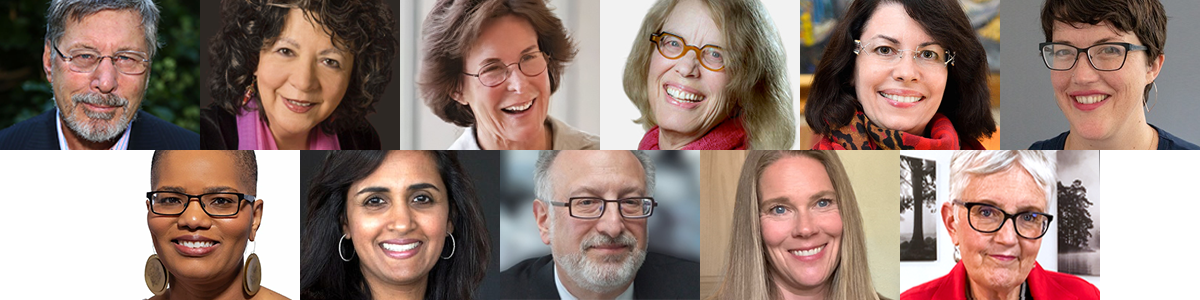
with Bessel van der Kolk, MD; Janina Fisher, PhD; Karlen Lyons-Ruth, PhD; Pat Ogden, PhD; Ruth Lanius, MD, PhD; Margaret Sheridan, PhD; Eboni Webb, PsyD; Usha Tummala-Narra, PhD; Martin Teicher, MD, PhD; Megan Schmidt, PsyD; Ruth Buczynski, PhD
Sign up for the Gold Package
We want you to get better outcomes from having invested your time and continuing education dollars into watching this program. What are you going to do differently after watching this module?
Thank you for sharing your information! I am a solution focused psychotherapist and I will pay more attention to the non-verbal language of my client and also address it to better atune emotionally to my client. I especially liked the idea of paying attention and address numbness
What was enlightening was the fact that an emotionally traumatized person is not able to name his/her feelings because they have no language for it. Forcing them to talk about their feelings is potentially making them feel like something is WRONG with them.
Talking about the “robot” or “anesthetized feelings” seems like a good idea to try out.
Thank you so much for this information.
Thank you for this brief, succinct, relevant presentation that includes the most updated ideas, research, and techniques for healing trauma, or in this case, neglect. I loved the 2 interventions Pat Ogden shared about body gesture of receiving and the use of a shawl as a prop for the felt-sense of containment.
Q. Will there be a segment on how to work with patients via Telehealth and how to adapt various techniques for on-line patients?
Ruth. . .every time I hear your closing comments of our trauma-work-ripples to the world, I am encouraged and blessed.
Key takeaway – that some clients may need to learn to be cared for before they could meaningfully receive that care.
Very valuable ideas about how to deal with a client’s difficulty in making eye contact. Offering progressive exercises – monitoring, altering posture, the therapist closing her eyes, asking what eye contact arouses. I have a client with this difficulty who tells me that her mother couldn’t make eye contact with her and how she felt ‘overlooked’ as a child. Seems so important that she should be able to see me looking at her with kind eyes.
very useful and enlightening for myself and my own healing. also to see how my inherited trauma affected my family.
First thanks a lot for what you do!!
I will use this on myself to heal my own wounds. Love all the techniques shared. And the insight, the explanation of where and why these happened clears a lot the way to heal and help others to do the same. Learn to understand that is not our fault what happened by our responsibility to heal. Thanks a lot again!
I tuned in to stay updated on trauma-informed care, but I got an added benefit today. One of the concepts you shared is helpful to the research and writing we are doing on self-worth. Thanks so much!
Thank you esp Pat Ogden for helping me realize how during those formative years, the neglect and trauma has contributed to the adult I’ve become. If I could only live it all over with ‘proper’ attachments!!
tj
Thank you for highlighting the often overlooked association between neglect and weak executive functions.
Thank you for today’s episode. My biggest take away is realization that there is a bias in assessment of neglect. Most of the discussion today revolved around circumstances. Only with Dr. Pat Ogden focus shifted more toward subjective experience. From my personal experience, I know this is crucial. Talking about circumstances may be futile and not helpful to actually heal. The core of healing is learning how to access and express subjective experience (both in general and related with specific circumstances in past) in relationship with someone that is able to express care and able to attend to what is being said.
As a current Master’s student in Counseling, this is amazing. My key take away from this session was realizing the important of slowing down and taking notice of your client and be more acutely aware of their readiness
I really appreciate Pat’s statements reminding her patient that she is seen/heard/known. I feel that we can all too often forget to validate the person in the present moment while we are taking them on this journey from past trauma to present safety.
Interesting to find that much of this response to life in present is based in first two years of childhood .. I have noticed that the term trauma is very prevalent these days and am in this course to see what it is that people say this means . I have taken a polyvagal seminar that I found quite helpful in understanding how this matches up with Buddhist philosophy in action of the satipattana sutta – which is the four foundations of mindfulness .. thanks for your good works . I’ll keep my eyes open where ever I am more clearly seeing the boundaries we walk within .
I am a student of Social Work right now and I just want to thank you for putting these webinars together and offering them at no cost. I’m accumulating student loan debt to complete my education and can’t really afford additional costs for this information but its value is priceless. When I am in a position to financially support your mission I will definitely do so and I thank you again for making these webinars accessible to people like myself.
Wonderful opportunity to sit in and learn. I am surprised how I am often doing the strategies taught today and I had no idea I was taping into my clients neglect. I feel armed with knowledge and look forward to the next session
Shannon
Great training and I learned so much, thank you!
I guess I would comment that cognitive behavioural psychotherapists in the UK (BABCP) do not physically touch or hold patients in comparison to other counsellors/ modalities. However using items may help, such as using scarfs or weighted blankets in session and for h/w. Generically for self-soothing and emotional regulation but also in the context spoken about in the trauma training for building attunement and challenging expectations and beliefs with patients who live with the affects of traumatic and emotional neglect.
Thank you so much! This validated many approaches I’m already using as a body-centered therapist. Will definitely bring a shal to my office and try it out when needed.
Thank you so much Ruth and all contributors .
A lot of information for me to process .
I look forward to session 2
Niall Bullen
I will be able to identify neglected children in public schools in a small area of Sacatepéquez, Guatemala, and submit them to psychotherapy.
Thanks so much.
Amazing Insights, I see many patients who exhibit symptoms / signs of neglect which I will be more able now to spot address and tefer to my pschology colleagues ( i am a neurologist )
Thank you so much for a wonderful hour. It was helpful to conceptualize the different types of neglect. I think I will pay more attention to the way I sit with clients and go more slowly with attuning to them, especially somatically. It was also helpful to learn how the executive functioning is affected as adults and to pay more attention to the cognitive issues.
I am getting ready to meet with a client today and I will be using some of the strategies mentioned today. I loved the conceptualization around neglect, which I had never heard before in such an indepth manner
i am so thankful that you share this lecture for free, I lear a lot, but don’t have the means to pay for this online lectures. thank you so much, I slowly pass on what I learn here …
I will make sure to acknowledge the client’s experiences and feelings so that she feels seen and heard.
Hi, I love the trainings and I am a Gold Package holder. I have been assigned a new client with a hx of neglect, today’s training has offered me new ways of working with her. Thank you so much for all you do.
Miriam Pacheco
Thank you
I am so grateful for this training and can see how my approach can be modified today for a patient who experienced emotional neglect in her childhood.
Amazing to hear all this, especially Dr. Pat ogden – really made me think how somatic work is so specific, not just to clients but also to the culture and society that they inhabit.
What a fabulously helpful program. Rarely addressed as far as I have found. Your team presents the most useful programs. Thank you so much. You are changing the future. Martha
Outlining the different forms of neglect was very helpful. The titration approach to getting neglect survivors gradually getting used to processing was also very helpful!
The importance of identifying the different types of neglect and the impact it has on individuals. This is something I learned today.
The information about eye contact is very insightful (excuse the pun) something so seemingly simple and yet immensely powerful.
The whole idea of being slower and staying with what is – is very inspiring – THANK YOU!
Like using experiments with postural shifts
An amazing start to being present with those who experienced neglect; I know my client will feel more seen at our next session because I showed up today with you.
Thanks.
i was curious about how to set up seating to support variable eye contact.
I am validated in using the interventions of noticing and and naming how a client is presenting to move toward supporting them to seek and accept connection, and move toward deeper processing.
Giving the client the space by closing my eyes while letting them experiment with something new. I love that 🙂
This has been so helpful ans there are lots of useful guides to work with particular clients. I really enjoyed listening to all the experts and I loved the way that Ruth guide us through each part. Thank you so much
The differentiation between experiencing neglect as something missing versus as a threat I found very interesting – and important.
Such an invaluable hour! Thank you
Amazing session! My key takeaway is that as a therapist I need to be attuned to client’s emotions instead of trying to bombard my clients with different skills.
Something which stayed with me is observing the client’s emotion and communicating that to them as a way to make them feel seen and validated.
Noticing eye contact and showing I see people through my words – just little things
Anyone know the time for the next session CT?
Thank you so much for this session.
Thanks so much.
Could you please share the questionnaires about neglect mentioned in this master class??
What were the names of the assessment measures Margaret used?
I have the same question.
Hi Maureen, it was difficult to understand but I did hear she suggested the Child Trauma Questionnaire as well as the Adult Attachment Inventory. There was a third one but I unfortunately did not get it.
I also have the same question
Adult Attachment Inventory and Child Trauma Questionnaire were a couple…missed the others
I believe that she talked about a questionnaire developed by Marty Tichenor, MACES and another one called MNBS.