The Neurobiology of Compassion
 |
with Paul Gilbert, PhD;
|
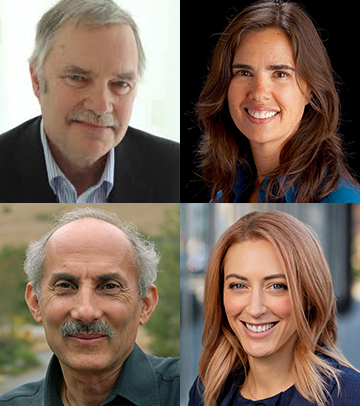 |
with Paul Gilbert, PhD; Kristin Neff, PhD; Jack Kornfield, PhD; Kelly McGonigal, PhD; Christopher Germer, PhD; Dennis Tirch, PhD; Emiliana Simon-Thomas, PhD; Ruth Buczynski, PhD and Ashley Vigil-Otero, PsyD
Sign up for a Gold Membership
Thank you to all who contributed to this webinar! So very grateful for your generosity of time and knowledge.
One of the ways I will apply what I learned in this webinar to my clinical practice with adults will be to include the concept of self-compassion into my approach to distress tolerance. I intend to share with clients Dr. Neff’s comment that “we give ourselves self-compassion not to feel better but because we feel bad”. I can see this dovetailing well when broaching the subject of distress tolerance. Typically when I introduce this subject from a DBT informed perspective I emphasize that the goal is not to eliminate all distressing emotions in our lives and in fact this is completely unrealistic; part of the human experience includes pain. Instead, the goal is to learn to tolerate the distress; this helps us to avoid becoming overwhelmed by it and to avoid resorting to harmful behaviors in an attempt to stop or escape the distress. Now that I’ve learned about Dr. Gilbert’s conceptualization of emotions as serving functions using the 3 Circle Model I can see how my previous approach might activate the drive system and I believe motivation is an important element in therapy . However, I also want to support activation of the soothing system and I think Dr. Neff’s phrasing promotes use of self-compassion in a simple way that will be easily understood by clients. Overall, I must say that the information I’ve learned about the neurobiology of compassion thus far in this series has engaged my own drive system and I am feeling driven and excited to apply this newfound knowledge to my clinical practice! Thank you all again.
Thank you for highlighting some very important take-aways from this webinar. It was hard to follow all of the components that I need to digest. Your comments have been most helpful, as well as thoughtful. Thank you for all you’ve shared.
All the speakers were excellent and helpful. In my psychotherapy work tomorrow, I am thinking of how to use the idea I learned today from Dr. Paul Gilbert and Dr. Dennis Tirch that self-criticism stimulates the threat system. One patient is aware that his self-criticism, which he associates with his mother telling him he should do more and achieve more, feels like an attack on his heart. I plan to experiment with presenting the three circles to him and perhaps use Dennis Tirch’s case example and ask him to draw each circle in the air with his hands. I’ll be curious not only to see the size he draws of each and reflections about that, but also to see where it leads. This man is very expressive with hands and gestures, and may choreograph new healing with this new imagery and information. Also I am eager to use Dr. Kelly McGonigal’s wonderful image of heart breathing with several patients. Many thanks for a great session.
Kelse,
The concept that self-criticism stimulates the threat response really resonated with me as well and I can see this as being very beneficial for clients. I typically incorporate some elements of CBT into my approach and try to help clients understand the relationship between their thoughts (such as self-criticism) and emotions such as anxiety or fear (“And when you have that thought, what emotion do you feel?”) and usually get lots of head nods and a willingness to examine and reframe thoughts. I also apply a neurobiological perspective to my approach and provide clients psychoeducation on how and why the sympathetic nervous system is activated in response to perceive or actual threat; this seems to help motivate clients to engage in exercises that will activate the parasympathetic system. Helping clients connect the dots between self-criticism and the activation of the threat response seems to have a similar potential to motivate clients to engage in efforts to reduce their self-criticism and practice self-compassion instead!
Thank you, Ruth and all contributors for your wisdom and passionate compassion. The presented ideas inspire me in my caregiving and self-healing. Maybe in the next segments, speakers can elaborate on the arriving and staying in the observer role. For example, as the ACE survivor, before I practice reparenting, I need first to have a capacity to observe and realize that I actively play two roles; the abuse and the abuser.
COURAGE comes from HEART. To start meeting ourselves where we are takes the courage to be clear about the three circles, the soften, sooth and allow that enables the self compassion that grounds us in our caregiving. The effect of compassion training on the four areas of the brain grounded the mindfulness of what’s up with Buddha’s message which is not suffering but the freedom from suffering for me. And that is helpful in my work of encouraging the practice of meditation which folks can misunderstand as a blanking out of suffering not an ability to be with all the aspects of self in a spacious and compassionate way. It takes courage to be with your self in a heart felt way that includes the all of it.How compassion gives us that courage and is the fruit of following the Buddha’s path to the end of suffering is wonderfully explained in this material.
As a follower of Jesus, a single parent, a men’s group leader, and an intercessor. I get a lot out of these. I look at what has been presented as an accurate description of the mind, body, and emotions. Then I ask how these things fit with the idea of a loving Father, and with this series especially, a wonderfully compassionate savior, Jesus. I am well aware that religious Christianity has often times initiated or exacerbated the problems. Many Christians don’t know a God who will soften and sooth. They don’t know a God who will be in the moment with them. They don’t know His heart for healing, even if He doesn’t get the credit. I have found my God joins with me in self-compassion to add His compassion. And many times, when I know the depths of His compassion and desire to see it in the world, and in the lives of those I touch and myself, then I am led deeper into compassion than I know existed. And there He invites me to join Him as He ministers compassion and life.
Thank you for making this video series available to both clients and therapists! I love the 3 circle model-it brings clarity to a complex system. I have clients in mind already! I love the simple exercises of ‘heart breath’ & ‘soften, soothe, allow’.
I agree! I appreciate the simplicity and clarity as well and plan to start incorporating them immediately. I have been doing an abbreviated version of soften and soothe without the “allow”. I have definitely found much greater impact when practicing these types of imagery and self-soothing exercises in session with clients and helping them experience firsthand the effects rather than just explaining the benefits of same. I do like to emphasize that these aren’t just “feel better in the moment” exercises, but they have therapeutic value in that when practiced regularly over time can impact our brains in ways that increase distress tolerance and promote emotional regulation. Exciting stuff!
You need specific bodywork fields.
I have used the application of self-compassion throughout my work with clients because I have found it to be so effective in a ways the other approaches are not. I also use quite a bit of polyvagal theory and neuropsychology. What I absolutely love about this training is that it connected so many of these systems together. Talking about the different regions of the brain and what is actually happening during compassion was so helpful in me being able to really fine-tune what I am doing. I hope that these kinds of trainings are making it into our Masters programs. One thing I would be fascinated with would be the connection between CFT and internal family systems (IFS). I find that self-compassion is a big part of IFS work. This training is such a great example of how all of the different works in modern Psychology are having overlay and enhancing each other. Even the research in Psychology is indicating a movement towards integration and collaboration in our diverse culture:-) thank you for putting this together!
These valuable insights are appreciated by me for self-help. I look forward to more information about how to learn mindful self-compassion. Deeper compassion for others can be generated by compassion for self.
Thank you for sharing this beneficial research!
I will share this experience by forwarding the information about the rest of the sessions,
the one at 11 pm today and the rest of tomorrow’s sessions to friends who are spiritual
guides and in the mental health field.
I will send the list to a family member who has enough biology background to be able
to use it for himself.
Thank you for making the present so clear and making it available.
Loved the 3 Circles and the softening, soothing and allowing. I find the allowing mindfully the more difficult with my clients.
Having a way to explain compassion and the process of compassion in concrete ways is enormously helpful. Coming from the Autism field, we are always trying to be create in how we empower clients to have control and knowledge over their emotions and what they mean. This training provided great strategies to adapt to my current work.
Great session, thanks for sharing the increasing knowledge around self compassion.
I really like the 3 circle model and need to go back to cement this info for myself so I can teach it to my clients.
Is there a handout available to share?
Thank you! I’m noticing more ability to be grateful and self compassionate translates to a better place for me to engage with my patients.
Finding a renewed ability to focus on and interact with patients in pain and in suffering.
Very nice to listen to your webinar.
Diane “restoring my burn out” in nursing ?
I use IFS and other parts work as well as EMDR with clients. My biggest take away from the session was the neurobiology discussion on how the temporo-parietal junction and PFC play a major role in mediating compassionate action. In my practice, I plan to incorporate Dr Gilbert’s 3 circles. I’ll also start to look at compassion meditation (the heart-breathing technique sounded very impressive) in my practice. Thank you for bringing this material and the wonderful researchers and practitioners together through this webinar.
Thank you for developing this course. It gives me clear structure and context to apply to my professional practice as a therapist. I have practice meditation for 8 years and receiving great benefits including self compassion. That is why I want to introduce to my clients. This course comes in time.
I loved the neurobiology explanation of the sequence in the brain. Lots of wonderful information that compliments my IFS work in which compassion plays an integral role. Thank you!
So much useful applicable information .
I plan to use the soften, soothe allow exercise tomorrow with a client who is experiencing intense disturbing emotions with regard to alienation from her children
Thank you for this opportunity and I look forward to the rest of the series.
Thank you for this very important training. It’s inspiring me to continue my own Self-Compassion training and share this vital information for transformation with others. I’m looking forward to the remaining three sessions.
Fantastic information, I find it most helpful in healing and compassion for myself but also for the clients I support. Thank you , thank you for your love and compassion.
I’ll utilize these tools of compassion in my daily life as a parent of special needs children, a life coach and pastor. Thank you for allowing me to take advantage of this project that I believe is so vital in our society today.
Thinking… How to apply the information to self and others with Autism Spectrum Disorder
Really important for me in working with traumatized children to remember that we need to shift into the sooth circle to help shrink the threat circle. And soften, sooth, allow is a great practice. I will use it with myself as well. Thank you so so so very much
I have had clients say that they find it easier to feel compassion for animals than other people. This program gave me some good tips on how they might develop their compassion skills.
I don’t have clients. I volunteer at 7Cupsoftea.com . Maybe the 3 circles will be useful to explain to people the importance of self soothing.
I’ve been using elements of the soften Suze and allow method with my clients. What I really think he’s going to make the difference is being able to share the three circles idea so that they can conceptually understand what is happening. Lots of good takeaway’s about how prosocial behaviour and kindness makes us feel good as well as the other person Which also can be a reminder to clients in distress e.g. seeking opportunities to help others can be a way to uplift ourselves when we are in difficult times. Needs to be used at the right moment of course.
I’m a client, acting as my own therapist because I can’t afford the help i need.
Consequently I really appreciate these free materials, but not the hard sell, dangling the golden carrot which I cannot reach.
As far as I can see, compassion is both my saving grace and my achilles heel.
it has left me wide open to the manipulations of drama queen narcissists for most of my life.
I forgive both them and myself for this, which I think is healthy compassion in action, but I am learning to be more wary now.
Actually, I will use it for self care to handle anxiety when doing paperwork. I was afraid that if I ordered the gold package, I would procrastinate absorbing the information, lose it in my computer and remain stuck. But I will also use it as a grounding piece for a self awareness group. To a large extent, I was already using compassion when working with my clients. I like the book: “Becoming theNarcissist’s Nightmare “
Dear Fred. In the U.S., we have therapists who are in private practice and have sliding fee scales, of which I am one. It really helps to have an objective other person to sort things out with. I have a comment about your statement that compassion can sometimes be both your saving grace and your achilles heel. There are reasons, of course, that you have noticed that you have a tendency to be attracted to narcissists. We all can tend to be inadvertently attracted to people who will wound us in ways that are similar to the ways we were wounded as children. So, there is more to understand about this, of course, and in particular what you specifically mean by “compassion” as there can be different shades or types of it. For example, compassion can be confused with putting others first before our own selves to our own detriment, such as when enacting a “rescuer” role. Best wishes as you continue to figure things out!
Thank you team.
Love Love Love. AGAPE. Compassion. to be a friend with our suffering selves. to stay. to pour forth love on pain not to rid ourselves of it but because we suffer we can stay loving.
For many easier in theory than in the moment when triggered , hence the practice component. interesting to separate out drive from heart as discipline day after day needs love to be the driver not fear.
questions:
what about HSP who are compassionate, empathetic but highly anxious? Is the evidence suggesting that those loving skills are deactivated whilst anxious. Are people who rate highly in loving kindness towards others less anxious? Or can people who are kind to others bit not self rate highly in anxiety? what about anger…does loving kindness effect threat feelings in particular ways according to mix of emotions felt?. Are certain loving kindness strategies more effective than others? how does body scan and awareness of breath compare to compassion?. Vipassana meditationis – per cent body scan and breath/ 20 percent compassion at a guess..
I am more conscious of my innate healing heart skills and he ways I communicate this to the people I work with about courageously placing love, care, warmth, appreciation of their own struggle expanding the heart of self and other.
empathy is a part of the journey in rapport building but love for my own heart is the key demonstration that can provide them and me with increased valour to approach suffering in a dynamic new way.
I absolutely love love love your questions! I had wondered in the back of my mind about the way that HSP affects my life and the lives of my clients in this context. There are many individuals that I have tract as being highly empathetic and or HSP that have developed strong defenses overtime, that tend to hide the strong capacity for compassion even from themselves. I am definitely going to look more into this, and I want to encourage others who are interested in this to to please look more into it. I think it would be Fantastic for NICABM to do something on HSP that is very somatic, neuroscience and Psychotherapy related. Thanks again for the thought-provoking 🙂
Loved the neurobiology components and particularly hearing Emiliana Simon-Thomas and Paul Gilbert’s impressive effortless knowledge and passionate deliveries.
I find using the 3 circles method very helpful for clients to aid understanding and to guide treatment goals
I work with people who were raised by parents with a serious (diagnosed or not) mental illness. Dr. Gilbert’s three emotional systems plugs right into my work with their unacknowledged trauma (and grief), in particular of individuals who are competent, non-disordered children of such parents. This is based on my research entitled: “Lives Unseen: Unacknowledged Trauma of Non-disordered, Competent Adult Children Of Parents with a Severe Mental Illness” at The University of Melbourne, now downloaded in 76 countries. If people are interested in this (easy to read) research, they just need to Google: Suzette Misrachi. There they will find my email address. Happy to send the links also to my brief articles, e.g., on grief, trauma, parentification, etc. I thought all the presenters were able to help me with ideas on how to further engage my clients’ awareness, particularly those who were “parentified” as a direct consequence of being raised by “unavailable” parents and who had to grow up faster than they really should have, in a developmental sense…
My work is very part time as I’m focusing on my writing, so apologies for not being able to purchase the package. I really appreciate your work and greatly look forward to experimenting with the tools offered firstly on myself! Perhaps that is where we all need to begin… Thanks again. It was great.
Thank you for this useful information. I was especially interested in the connection between compassion and the body. I plan to use the labeling of emotions, along with the 3 circle approach to help clients become aware of their feelings, coupled with soften, soothe, and allow – to highlight the body’s participation.
I particularly enjoyed learning more about the discovered or evidenced links demonstrated between the mind, body, brain and mental health and emotional wellbeing. I will be using Dr Gilbert’s clearly portrayed 3 circle systems model with my clients to develop self-compassion, nurturing and soothing behaviours to counter anxiety, shame and other unhelpful emotions.
Great! Great for self-healing and my work in self-learning!
Thank you, I found the session thoroughly informative and useful.
I love the self-compassion concept of “soft-sooth-allow”. The example of exercise with putting a hand to a body part where emotion is present is so simple but powerful. This idea of softening the emotion, soothing it and allowing it can be exercised when working with youth within trauma informed care.
The information from today’s session supports the pyschoeducative part of my coaching with clients who have a cancer diagnosis to enable and empower them to understand and actively engage with compassion (and self compassion). Thank you, it was a very interesting, well presented and accessible webinar.
Sue Jackson, Whitespace Coaching UK
I work with children and families to support parents who struggle or have had child protection concerns…My biggest take away is the 3 circles to help identify how we operate and why…this will be very helpful for many of my clients, particularly the men in my program, to label and help develop the soothing and nurturing parts of themselves that may not have been developed or supported in their lives. I believe this will go a long way to support healthy attachments for them and their children. Thank you for this wonderful learning opportunity.
Thank you. Very helpful explanation and integration of concepts. Also appreciated the practical tools. Looking forward to next week.
Dr Neff’s statement that compassion can be learned is very hopeful. Her statement that we can learn to reparent ourselves is powerful and freeing: “Giving yourself what you may not have had as a child.”
Thank you – it’s one thing to know these things ourselves but I think being able to share them with our clients, especially by talking about the three circles, could be invaluable.
Thank you for this excellent training. I am watching it from a public health perspective. I am seeking ways to increase self-compassion and biological and emotional awareness with a more population-based, prevention-oriented focus. I can see building awareness and skill building into disease prevention programs and social marketing campaigns.
I have a specific client that struggles with paralyzing anxiety who i think will really be empowered by the 3 circle model. I plan to look into it more and present it to him next time I see him.
I need to learn self-compassion. At least now I have a blueprint to help me as a guide. Thank you for helping those with mental illness. A BPD survivor.
Today‘s session was a great reminder of the importance of ensuring to continue to learn and evolve as a clinician as more of an understanding of the effects things like compassion can have on health and overall well being.
The circle system is easy to understand and I could really see howhat it would pin point a choice for the client a path to follow for everyday life Than you Ela O’Neill
How awesome. I’ve had many ahah moments during this video. So looking forward to next week.
Threat drive soothing circles is a must
Thank you all so very much
I found the drive threat and soothing system a very helpful way of looking at how ways our energy in motion system operates
Thank you very much! It was very helpful for my work with clients who experience anger and anxiety!
Thank you!!!! All of your programs are fantastic. I am very thankful for the opportunity to learn. Your programs provide additional tools for me to use with my clients.
Cathy
very helpful from a person who suffers from PTSD and depression. It helps me to see the big picture as I seek to heal!